|
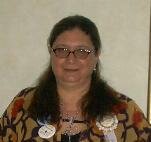
Chip Davis, a long time advocate on behalf of Fibromyalgia and Chronic Fatigue and Immune Dysfunction was kind enough to share his experience in the advocacy movement. He talks about his life and how the chronic illness caused him to exchange successful business pursuits for new directions in life. Chip has a wealth of experience and his views of advocacy are based on the depth of contact with and experience organizing in the patient community.
OFCW: Tell us about yourself
Chip: I’m a native of Lumberton, NC, and have lived here almost all my life. I reside here with my partner, Nancy. My children are my two dogs and six cats.
I’ve been addicted to music since a very early age, carrying that interest forward into a band in my late teens, which won the NC Battle of the Bands, in 1970. My love of music led me to my first career as a radio air personality for fourteen years.
I then moved into television, first as a sales representative in Fayetteville, NC, then as a local sales manager for an NBC affiliate based in Wilmington, NC. My first practical use of computers came as a result of this position, where I created sales material for the use of my sales team. I was then offered a position as advertising manager for a furniture chain based in Winston-Salem, NC, with thirteen stores in three states. After a year my father’s terminal cancer led to my return to my hometown of Lumberton, where I founded a graphic design and commercial printing company. The business was successful with in three years but by 1990, I began to experience a number of unrelated symptoms that limited my ability to work. I tried to continue working the eighteen hours days required of a small business owner.
Being an Internet user since the late 1980’s, I turned to net for any information on these seemingly unrelated symptoms. Someone suggested I look at the Arthritis Foundation’s website because I knew I had arthritis, and with the pain I experienced, I thought it would be a logical starting point. Lo and behold, one of the diseases listed was fibromyalgia. When I went to that page, I found it could have been written specifically for me. I printed out all the information on FMS, knowing the Arthritis Foundation was a respected organization for arthritis and other disorders. I took it to my primary care physician (PCP), who glanced at the multiple pages without actually reading them), and tossed them in the trash saying, “yes, I’ve heard of FMS and I don’t believe it exists”. He diagnosed depression, put me on anti-depressants and suggest I see a “shrink.” I never saw that physician again.
I went for over a year without a personal physician, using Urgent Care when my pain was uncontrollable. I knew that I was depressed but felt there was more than depression because of the multiple symptoms I experienced, such as the inability to sleep, chronic fatigue, pain (not only in my joints but all over my body), a number of sinus-related problems, persistent GERD, and as readers will understand, the list goes on and on. At one facility a young doctor asked if I had ever heard of fibromyalgia, and I was amazed. He prescribed Ultram for my pain, from which I received immediate benefit, and referred me to my current physician, who is knowledgeable, supportive, and believes in the mind/body connection and a multi-disciplinary approach in the treatment of FMS. She confirmed my diagnosis of FMS, referred me to a rheumatologist at Duke University, who also confirmed the diagnosis. She also referred me to the pain management center at Cape Fear Valley Medical Center in Fayetteville, where I received trigger point injections, physical therapy, exercise, massage, and biofeedback. I felt it was too good to be true, and it turned out to be – my HMO denied my claim for treatment at this facility.
Although I continued to try to work, first full-time, then part-time, and without the treatment I had received at the pain management center, my symptoms rapidly grew worse, and by 1999 I was unable to work at all. I closed my business, filed for social security disability, and began the over two-year wait before I was approved by an Administrative Law Judge in April 2001.
OFCW: What did you do to learn about the disease?
Chip: After first learning a little about FMS from the Arthritis Foundation site, I began to do keyword searches on Yahoo and found Moira Smith’s site and the information on the Fibrom-L support group. The site also discussed the newsgroup, alt.med.fibromyalgia; that is where I began. I then learned there was a gateway that joined alt.med.fibromyalgia and Fibrom-L, which showed messages from both groups. I lurked and read messages for about six months; following hyperlinks found in messages on the group, and read everything I could about FMS. Once the gateway was closed in 1997, I joined the Fibrom-L email support group list because it seemed to be a close-knit group of knowledgeable people who offered not only support but also valuable information, both medical and practical. I’ve been there ever since, as a member, as a co-facilitator, and in my current role as an advisor.
OFCW: I know that you and your wife, Nancy Solo, have been involved in a lot of different advocacy efforts. Could you describe them?
Chip: First I’d like to say that Nancy is my life partner and my best friend, and we’ve been able to combine our advocacy efforts to benefit others and ourselves. Nancy was involved in advocacy long before I ever dreamed of it. She started The Chronic Syndrome Support Association, Inc., (CSSA) and a non-profit organization, in August 1997. I offered to print the pamphlets for her organization, and a funny but true story is that she blew me off – the first time. We got to know each other through our roles as co-facilitators of Fibrom-L and developed a close friendship as well as a working relationship, since I began to print not only the pamphlets but also CSSA’s newsletter.
Nancy’s advocacy efforts included speaking before the AACFS/FM and founding UNIFY (an offshoot of CSSA) in an effort to bring the various faction of FMS, GWS, ME/CFS, MCS, CMP, PPS and related illnesses together to try to work together as a team for the first time since there is power in numbers (or so she thought).
One of the biggest drawbacks of advocacy with any of these illnesses, is the illnesses themselves. Nancy was able to rally a number of the major players in advocacy who offered to head committees and take direct responsibility for aspects of the organization itself. However, in almost every case, the illness itself prevents those good intentions from becoming reality. When you are as sick as we are, it’s almost impossible to guarantee anything, much less meet goals, objectives and deadlines.
OFCW: What are some of the stumbling blocks that you see for the average patient in advocacy? Do you think there is anything experienced advocates could do to help?
Chip: First, as already mentioned, the illnesses themselves.
Another problem is communication via email, which lends itself to miscommunication, misinterpretation, and conflict. There’s nothing worse than attempting to reply to a message when you’re in the middle of a flare. You’re apt to write something based on the way you feel, not the way you think.
Third, unfortunately there are also so-called ‘turf wars’ among both advocacy groups for the same ‘label’, as well as between those such as the FMS vs. CFS camps.
There is a critical need for cooler heads to prevail. As much as I hate to say it, there are some so-call ‘advocates’ who really need to step aside, as they are hindering any progress that could be made. It’s my belief this is one of the reasons FMS groups have begun to distance themselves from the CFS groups. It’s also the same reason that some credible CFS groups are trying so desperately to associate themselves with FMS groups because FMS is seen as a more legitimate disorder, at least from the government’s viewpoint, than CFS.
That said, I would still encourage anyone who has the time and energy to get involved in advocacy. There are wonderful non-profit organizations such as The National Fibromyalgia Partnership, led by Tammy Liller; and The Wisconsin CFS Association, led by Pat Fero; The Fibromyalgia Community, led by Chip Davis; The Chronic Syndrome Support Association, led by Nancy Solo; The Fibromyalgia Network, led by Kristin Thorson, which also funds a large amount of research; and even The CFIDS Association of American, led by Kim Kenney and Jon Sterling, which has by far the best lobbying efforts in Washington; who all welcome volunteer efforts from anyone interested in helping the cause.
OFCW: If you could pass a law tomorrow to help FMS and CFIDS sufferers, what would it be?
Chip: That’s simple. Full prescription drug benefits such as those provided under Medicaid to anyone who qualifies for disability.
On the state level, I would like to see the application for SSI and Medicaid streamlined. As an example, I was approved for SSI retroactive from my date of disability. However, by the time I received the Medicaid certificate, the eligibility period for filing had lapsed, and I was unable to get any benefits at all, such as reimbursement for prescription costs and physicians’ fees. One stroke of the pen could prevent this type of situation from happening. If you are awarded Medicaid retroactively, there should not be a time limitation on the period in which you can file for reimbursement.
OFCW: What services do you think cities or states could offer patients with FMS or CFIDS?
Chip: I think it would be great on the local or state level if awareness days were more than just a governor or mayor’s signature on a proclamation. I’d like to see the same attention given to FMS and CFS as is given to breast cancer, muscular dystrophy, March of Dimes, diabetes, etc. I realize that has to start at a grass roots level – it’s not the responsibility of the cities or states themselves, but of the residents within those locales. In order for that to happen, there must be more advocacy and awareness campaigns. I think the general public does not understand how debilitating these disorders really can be. It’s as I have always said, ‘the good news is it won’t kill you – the bad news is it won’t kill you’. Just the other day I had the opportunity to photograph a ribbon cutting for a local business as a favor to a friend. I ran into a number of friends and former colleagues who knew that I was no longer working and received disability, but their general comments were things like, ‘how is your back?’ not ‘how is your fibromyalgia?’ Rather than explain that it’s not just my back, even I fell into the ‘I’m just fine’ response.
OFCW: What direction would you like to see future advocacy efforts take?
Chip: In addition to increased awareness and understanding on the part of advocacy groups, I believe our biggest battle has to be fought in Washington, DC. In order to do that, advocacy groups have to come together, united for one unified cause. Ideally, what I’d like to see is a national association set up that would speak on behalf of all FMS and CFS organizations. Members would pay dues to the association; in turn those dues would be used for lobbying efforts, not just for an individual organization but also on behalf of all member organizations. Whether that can happen is still very much up in the air. That’s what Nancy attempted with her UNIFY Coalition, but what she found, and what I found to be true, is that those wishing to participate were not organizations, but individuals, and as I said earlier, there continues to be some perceived turf wars within various national level groups. It’s my hope that one day we can all speak with one unified voice. Unfortunately, I cannot be one to spearhead an effort such as this, simply because the 5+ years that I’ve dedicated to advocacy and awareness efforts have burned me out, and I’ve needed to concentrate on my own healthcare.
OFCW: Do you feel that these disorders strike men differently than women? Are there more specific advocacy efforts that we should undertake for men? How could we better help men with these disorders?
Chip: Current medical evidence suggests that FMS strikes about 9 to 1, women to men, although I have no scientific evidence to back it up, I believe the ratio is probably closer to 70/30 or even 60/40. I’ve corresponded with too many men with FMS to believe the numbers that the government has issued.
It’s my opinion, and only an opinion, that there is still a reluctance on the part of men to allow that ‘male ego’ to let its guard down and admit something is terribly wrong. I’m a classic example of that myself. I continued working over 5 years after becoming “full-blown”, resistant to accepting the truth, finding answers, and getting treatment.
In a 1993 study, the CDC identified a CFS population that is 85% female overall. However Center for Disease Control's Seattle study found that only 59% of the CFS patients were women. Lisa Lorden reported on her About.com CFS/FMS site that a study published in the Journal of Rheumatology found that men with FMS seem to have fewer and milder symptoms. However, an Israeli study found that men reported more severe symptoms than women, in addition to decreased physical functioning and a lower quality of life. As Lisa said, “It’s clear more research is needed before the true nature of CFS/FMS in men will be known”.
I think it’s important in our awareness campaigns to target men and women equally. As with studies of men and women with heart disease, I think it will be shown that symptoms manifest themselves differently in men and women with FMS/CFS. Here research is the key, and the sad truth is that enough research hasn’t been done on men to make this determination. So I don’t know if as much a case of advocacy efforts as it is research efforts. With valid clinical research studies, we should be able to find how we may better help men with FMS/CFS.
All opinions are those of the person interviewed and not those of Our FM-CFS World, Inc.
 |
Interview Conducted By:
Anne-Marie Vidal
Awareness and Advocacy Coordinator