Karen writes about the Memorial Service for Transplant Patients
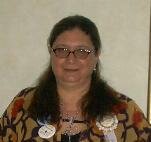
Chronic Fatigue Research France, Inc. is proud to put the spotlight on Karen Davies of Bristol, England. Karen, happily married to Martin Davies for 11 years, is a Heart of the Survivor recipient. She is the mother of two grown children, Rachel and Simon, the keeper of two cats. Karen has Chronic Fatigue and Immune Dysfunction. Fibromyalgia and is kidney transplant recipient and survivor. Since Karen was under the weather, her husband Martin was kind enough to answer questions about Karen so that our readers could get to know this wonderful lady.
 |
Describing Karen’s lifestyle changes, since CFIDS, Martin said:
“When we first met, Karen was very active and used to cycle everywhere. Gradually she has become less and less physically able and now she has to spend most of her time at home. She has always been a great reader (as am I) and she normally has three or four books on the go at once. She especially favours books concerned with the spiritual side of life, but also is a great admirer of Elisabeth Kubler-Ross, May Sarton, Germaine Greer and Rachel Naomi Reman. In fiction, she likes Marion Zimmer Bradley and Katherine Kurtz. She also likes cat books, like Paul Gallico’s and Deric Longden’s. In the medical area, she thinks very highly of Bernie Siegel (Love, Medicine and Miracles.)
(Karen) is very keen on music and has wide range of a taste, but is inclining more towards classical and vocal music, choral and plainsong. She loves John Denver and the Scots-Australian singer Eric Bogle. This year we were able to go up to Worcester to see Eric Bogle play and were invited to his dressing room for a chat and photographs. He even dedicated a song to her! Karen was a guitarist for years, favouring the flamenco style, but also sang and played modern folk music, and has a close understanding of many types of music.
Since we moved to our present home and she had her kidney transplant, she was able to create a wonderful, magical garden, which emphasises wild life, harmony and natural colors. We have frogs, a visiting hedgehog, native plants, many different birds and as little lawn as possible! This garden is dedicated to her kidney donor. Sadly, as Karen’s health decline, she has been unable to give it the care it deserves, but it still has its magical quality and whenever she does get into it the effect on her is very positive and very apparent.
Karen is a very talented knitter and for a while, used to produce beautiful Arran style sweaters. These are particularly complicated, with fascinating Celtic designs on them, and are wonderfully warm. Oh, I should mention she is a terrific cook as well, especially expert on high protein vegetarian dishes (we are both veggies and non drinkers).
There are many other things Karen is interested in, but in a way, all of them are secondary to her deep empathy and love for the human race. As a young woman she founded and ran two support groups, one for drug victims and the other for miscarriage sufferers. I did not know her then but I have it on good authority that she ran both organizations virtually on her own, always available for those who needed help of any kind. And she is still like that! Even when she is barely able to rise off her bed and is in dreadful pain, any request for her help is guaranteed to bring her into action again (she pays for it later). She is a constant example to me in this area. Going on-line has given her the opportunity to reach many other people and at times, our in-box is almost jammed with emails from people in pain, grief or trouble, all reaching for Karen’s hand. I wonder how many of them realise how sick she is herself.
This feeling for the hurt and needy is extended to the animal kingdom, and many strays have found its way to her door. I often wonder if our meeting would have ever happened if I hadn’t chanced to be leading two collie dogs about..I don’t think she noticed me until it was too late!
AMV: This certainly indicates how Karen came to become a nurse. She certainly was a caregiver with an interest in medicine!
Martin: Actually she wanted to be a doctor and was even accepted for med school, but was never able to take it up. There was no way she could procure a grant to do it. … she would have been a marvellous doctor. When she was nursing she specialised in geriatrics and still has passionate beliefs and opinions about geriatric care. If she was able to work now, it would probably be in this area or in hospice care.
AMV: I know that you have kidney disease: how long has this been a factor in your life?
Martin: Karen has polycystic kidneys, that is, her native kidneys are covered in cysts. Not only do these often become infected, which is terribly painful, but eventually they impair kidney function to the extent that they just stop working. When Karen was diagnosed, she was a teenager, and at that time the diagnosis basically meant death. There was virtually no dialysis and transplants were still in the research stage.
By the time her kidneys actually failed, there had been many advances and she was able to start dialysis not long after we were married, in 1993. At first her dialysis went reasonably well, but over time it became less and less effective and by the time her transplant came up, in June 1999, she was very sick. Sadly, the transplant has also not been a great success, though from a medical point of view it has done well. But after the first few months Karen has been plagued with a variety of very unpleasant symptoms for which she has had all kinds of tests and treatments with very little effect.
This is why we began considering Chronic Fatigue Syndrome (CFS) as a possibility. Her consultant was not happy with the idea as he regarded CFS as a ‘dustbin diagnosis’, meaning that once she was diagnosed with it, every symptom would be attributed to CFS and not properly reviewed. We did not know a great deal about CFS and Fibromyalgia when we first started researching it, but the more we looked the more it seemed to fit with many otherwise inexplicable symptoms. It is accepted, now, that she has CFS and FM. Like all transplant patients Karen takes immuno-suppressants to prevent the body rejecting the transplanted kidney, and it is quite likely that her CFS symptoms have some connection with that. But she may well have had CFS for years. (Note from Karen: I think it possible that I first showed signs of CFS when I was about 20 years old…everything then were put down to my kidney problems.)
At present she is suffering from dysautonomia, in which the ANS ( autonomic nervous system) malfunctions, causing any number of problems, but especially gut, bowel and bladder problems and some neurological anomalies. How far this is related to CFS no-one knows, it may even be CFS for all I know. They did schedule some tests in London in connection with this but she decided not to go, as there is no real treatment anyway.
AMV: You live in a country that has free medical care and access to free prescriptions. Do you feel that you wait long for care? Are you satisfied with your care?
Martin: As regards the Health Service, there is much said over here about its inadequacies, but the quality of care varies greatly from one region to another. In Bristol the Renal Unit is pretty good. When Karen was on dialysis we were able to make use of the Home Team, which is a group of renal nurses whose job is specifically to deal with home dialysis patients. You could phone them and either speak direct or leave a message which would be speedily answered. We feel our own unit is among the best in the country, having compared notes with renal patients in other districts. But of course it could be better. As with all hospitals in this country there is an acute shortage of beds. Not long ago Karen was desperately sick and should certainly have been taken in at once, but there were simply no beds and we were told to wait until the morning, which meant she had to pass a terrible night of pain and vomiting. To be fair we could have gone to A and E (or ER as I think you call it) but these are really horrible places, full of drunks, violence and stressed-out staff who know nothing of renal medicine.
We do feel we are lucky compared to people in the USA, for example. There would not be any question of our being able to pay for even a fraction of the treatment Karen has, and it is very unlikely that any insurance scheme would have accepted her in the first place. Renal patients find it almost impossible to get life insurance, and because Karen’s renal disease is genetic and manifested itself so early in her life, it would have been obvious from a long time ago that she would be a very bad insurance bet. And there can be no doubt that in many, if not most countries Karen would have been dead a long time ago.
In many other ways we feel fortunate to be in this country as regards the health care. We have had letters from Americans who are just amazed that we have been able to get a home visit from a doctor. For us it is quite a common occurrence and I don’t know how we would cope without it. Karen is entitled to free prescriptions..and that is just as well, because her drug list is probably thirty or forty items! But even more we feel lucky to be able to see one of the top consultants in the country, and if he happens to be away, there are two or three others almost as good. This isn’t to say we have been free of run-ins with them. Over the years, it’s been a bit like a marriage, with its fair share of rows and walk-outs. And we do feel frustration that they seem to have been able to help so little in the last few years; but then they seem almost as frustrated, and it certainly isn’t because they can’t be bothered.
|
Karen wrote this on the memorial service for transplant patients in November 2001:
In a few days I will be going to a very special and very unusual Thanksgiving and Remembrance Service. It is for those involved with Transplants, (all sorts, from tissue transplant right through to heart and lung transplants.) Donor Families, Donors, Recipients, Doctors, Nurses, and families and friends of those people as a way of Remembering and Thanking all those involved.
As most of you already know, in June '99 I had (almost for my birthday!) a kidney transplant. I was very ill on dialysis and things were going very badly. One evening the phone rang, and there began a whole new chapter. New book.
Well, in December of that year we went to one of these services, because we felt the need to remember and be thankful for this most incredible Gift of Life.
I cannot begin to describe what this transplant has done to both our lives, and I can never ever begin to say thank you to the family of the person who sadly died, and left me this legacy.
~~~~~~~~
We went to the church, a very old traditional English church in a very pretty English village. Inside, it was lit solely by candles; there was a huge Christmas Tree, lights dancing like hope, flowers and holly wreaths, so many candles ....
And as you entered through the old porch, on the left were some hand-bell ringers playing Silent Night. This was where the first tears of sorrow and gratitude fell. On our right, someone handed us a pink carnation and a label. This was to write a message of thanks on, either to our donors, or our lost ones, or whomever or whatever we felt we needed to write.
We sat down, Martin and I wrote on our labels and attached them to the carnations. My son and his girlfriend who had also joined us, wrote one which they shared. The hand-bell ringers were playing the most beautiful selection of carols and the church filled, and filled, and filled.
In all my life I had never seen a church so full that people were standing in the aisles, and outside the porch. There were many we knew there, staff from the renal unit, fellow patients, friends whose son had been an organ donor. There was an incredible sense of unity and purpose there.
The Service began. We sang a few carols, listened to a reading, relevant to this situation. In between, a Renal doctor spoke about watching your patients die, how hard that is, and of being able to see them live again.
A couple from a nearby city spoke about their son who had been killed, and how it felt for them, that first Christmas without him but knowing that some people had been given a chance of life. They spoke of the letters they received from the recipients. As they spoke, their voices cracked and broke, and tears fell freely.
There was the lighting from a huge Advent Candle of four smaller candles representing the various aspects of Transplantation and Donation. Each of the four was lit by a recipient, a donor's family, a nurse, and a living donor. All five candles sat in the middle of a beautiful wreath woven from plants and holly and ivy. These candles were to burn continuously alongside the Advent Candle throughout Advent.
Then a heart recipient told of her first Christmas after so very nearly dying. And she spoke with joy as she told us how her family had come alive again also after her transplant.
A kidney recipient spoke of her transplant and how two years after, she was able to share the first Christmas with her son, who had been born since she received her kidney. Two new lives...
A nurse spoke, a transplant co-ordinator spoke, each in their way intensely moving and memorable. Each of them telling the story of grief and loss, of Life, of learning to live again.
~Then we noticed that dark had fallen outside. The stained glass windows glowed, beautiful, brilliant, the whole church alive with such a force of Love, and lit only by candles....it was magical, truly magical.
At this point, the choir sang and the organ played softly, and everyone there who wanted to, walked up to the altar and placed their pink carnation on the silver tray the vicar held.
Everyone of those people in that queue was crying. In front of me was a father with his young son on his shoulder, crying. Behind me was a lady, alone...with me was Martin, I couldn't see clearly because of my own tears. Each person in that queue had their own story, loss, birth, grief, life, all of life.
We paused a few seconds, to remember, to thank and to bless, and then turned, and I supported my sobbing husband back to our seats. And the queue went on and on.....
How do you say thank you for the Gift of Life? You cant. How do you remember your son, daughter, friend or family who was also part of this? There were no answers, but each of us in our own ways, said what we felt we needed and wanted to say. In our hearts, in our tears.
The music stilled after the queue was ended. There was a silence in that beautiful church. A silence so rich and beautiful, you could almost touch it.
The vicar read a prayer, and we left, moved beyond all expectation. Enriched and grateful for this opportunity to share.
Martin, my son and his lass and I stood outside that church, looking at those colours in the stained glass windows, speaking with or nodding to people we knew.
I looked back, feeling as though I stood in a place outside of time, and thought of the young man who had bequeathed me Life, and of his family who would soon be facing that first Christmas without their son. And the tears that had never really stopped began again.
Something had happened, something had changed. Life had reaffirmed itself.
~~~~~~~~~~~
Karenanne.
As each year unfolds I still remember my donor, his family, his friends and the enormous Gift given to me. And I still can’t remember this without tears streaming as they did, that first occasion.
All opinions are those of the person interviewed and not those of Our FM-CFS World, Inc.
|
Interview Conducted By:
Anne-Marie Vidal
Awareness and Advocacy Coordinator