|
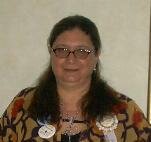
Lisa Lorden, a well-known writer on a variety of subjects important to those with Chronic Fatigue and Immune Dysfunction (CFIDS) and Fibromyalgia (FMS), took time to speak with OFCW via telephone on a warm afternoon in August. Lisa is very familiar with the array of health, social and interpersonal issues affecting patients with invisible disabilities. She has coped beautifully with a life interrupted and offers some insights that many of us will find helpful.
OFCW: Could you tell us a little about yourself and how you came to find out that you had FMS or CFIDS?
Lisa: The CFIDS came first. In January 1995, I was in graduate school in Indiana earning a Masters degree in Education Administration when I suddenly became very ill with the flu. It was very virulent; I had a 105 degree temperature and couldn’t get out of bed without feeling I would collapse. At that time, the flu was going around on campus, so it didn’t seem that unusual to me or to the doctor I saw. Although I recovered from the most acute symptoms after a couple of weeks, the effects seemed to persist. I felt exhausted but was unable to sleep for more than a few hours each night. I was constantly going back and forth to the student health center with sore throats and fevers. But the doctors seemed to think it was just the lingering effects of a virus, made worse by the stress I was under in my last semester of graduate school.
In May I completed my degree and returned to home to California. But once I started working, I began to get very sick again. I continued to run a fever, felt exhausted but couldn’t sleep, and had several bouts of strep throat. My general practitioner suspected CFIDS and sent me to several specialists who all confirmed it.
Still I thought I could overcome it and just keep going. I had a job I loved and I was working 12-hour days and then collapsing into bed in the evenings and all weekend. I was on a constant stream of antibiotics to fight the recurrent infections, and other meds to help me sleep. Yet I was getting steadily worse. Finally, my doctor recommended that I take a month off from work and see if I could regain my health.
OFCW: Did the time off help?
Lisa: Unfortunately, I got worse before I ever got any better. Once I stopped fighting it, my body kind of “gave out.” My month off became the summer off, and then I resigned myself to taking the rest of the year off. Eventually, I had to stop setting deadlines for when I’d be back again. In fact, I was never able to return to that job. I’ve since learned that many CFIDS/FMS patients have a similar story. We tend to run ourselves into the ground before we realize that we can’t overcome this through sheer determination.
I continued to get worse. Unable to stand or even sit without feeling severe dizziness and exhaustion, I was mostly housebound and nearly bedridden a significant amount of the time, despite any treatments I tried. Along the way I was diagnosed with Fibromyalgia as well. I was so debilitated after a year off from work that I was unable to take care of myself and had to move back in with my parents. It was 3 years before I was able to move out on my own again.
OFCW: How did you become a writer, editor and regular columnist?
Lisa: I had always like writing and I’d had some things published while I was in graduate school. After I got sick, I started writing articles about my experience and how I was coming to terms with my illness. It was very cathartic for me. I submitted a few articles to The CFIDS Chronicle, which is the newsletter/journal of The Chronic Fatigue and Immune Dysfunction Association of America (CAA), and they were published. It meant so much to me when I began to receive letters from other patients who could relate to what I had written and were helped by it.
In 1998, while searching for CFIDS/FMS information on the Net, I came across The Mining Company (later About.com), which was a network of hundreds of websites on various topics, each one run by an individual “Guide.” They were looking for a Guide for their Chronic Fatigue Syndrome site, so I applied and was hired. I later requested that Fibromyalgia officially be incorporated into the site, and they agreed to change the name to include both illnesses. I spent about 3 years on the project—writing articles, expanding the site, and building a community where people could find hope and support. It has been the most meaningful work I’ve ever done.
OFCW: Do you take part in advocacy activities?
Lisa: There are many wonderful people who are out there planning and facilitating activities. Fortunately, I’ve been in a position to support, promote, and publicize those activities, letting people know how they can get involved, and that we all make a difference. But I see my personal role in the CFIDS/FMS community as less about political advocacy and more about advocating for the individual—helping people live their best lives and learn that they can find great joy and meaning in life despite CFIDS/FMS.
OFCW: What are some of the stumbling blocks regarding advocacy that you see for the average patient?
Lisa: The people who need it—those who are sick and disabled—are the least able to do it! It’s difficult to devote time and energy to advocacy, when simply managing our daily lives is already such a challenge.
OFCW: Do you think there is anything experienced advocates could do to help?
Lisa: The average patient often feels very alone and isolated. They may not know how to get involved, or they may not believe that they could possibly make a difference. Experienced advocates can provide guidance, offering suggestions for simple steps people can take—writing a letter, making a phone call, or joining an organization. The more specific and practical information they can provide (a sample advocacy letter, for example), the easier it will be for people to take part who might otherwise find it too overwhelming. People need to know that they can make a big difference in a small way, and that they don’t have to be an experienced political activist to do it.
OFCW: If you could pass a law tomorrow to help FMS and CFIDS sufferers, what would it be?
Lisa: We all hope for a cure, but it seems unlikely that one will be found anytime soon. So what CFIDS/FMS sufferers need now is help in maintaining a decent standard of living for themselves and their families. I know of people disabled by these illnesses who have lost their jobs and their homes and ended up on the street. The disability process needs to be transformed so that it does what it is supposed to do—help those who unexpectedly find themselves unable to work. Right now, the battle for disability that most patients must fight is so stressful and degrading that it can be as painful and traumatic as the illness itself. And again, the people who need these benefits are the ones least able to fight for themselves. I guess there’s no simple solution to this, or one law that could make Social Security work better for people with CFIDS/FMS (or anyone, for that matter), but if I could change something tomorrow, it would be that.
OFCW: I have met you personally and know that you are a beautiful young woman who happens to be single. Do you have suggestions for the many single people trying to have a social life while having CFIDS and/or FMS?
Lisa: I have been single the whole time I’ve been dealing with these disorders, and I have made an effort to date and have relationships throughout most of those 7 years. It can be difficult to even think about dating when at times we can hardly get out of bed! But I’ve felt strongly about making this a priority in my life, even when I was at my sickest. These illnesses can be so isolating and result in so many personal losses. I feel it’s important not to lose the potential to share your life with someone.
There are many sticky issues in dating for those of us CFIDS/FMS—“What do you tell someone?” or “When do you tell someone?” The fact that these illnesses are invisible can be both a blessing and a curse. It helps to still be able to look attractive—to not look sick—but it can make it more difficult for others to understand. But in my experience, people I’ve dated have found it much easier to accept my limitations than I do!
I think the one thing that stops most people from dating is the feeling that they can’t—due to lack of energy or fear that someone else won’t accept them. You have to remember that although you may not be able to do the same things you did before you got sick, you have much to offer someone and to contribute to a relationship.
The other obstacle is the fact that—let’s face it—with CFIDS/FMS we don’t tend to get out much. I’ve spent much of the last few years so close to home that if I didn’t find other ways to meet people, the only person I could start a relationship with is the mailman! For me, online dating services have been a great thing and have helped me to come in contact with lots of people without expending too much time and energy. In fact, Internet dating allowed me to find the wonderful man I have in my life now, so I couldn’t recommend it any more highly.
OFCW: I have heard CFIDS and Fibromyalgia called “the litmus test for a potential partner.” Would you agree?
Lisa: Yes and no. I do believe that how someone responds to these illnesses can be an indication of their character—their capacity for love, support, and acceptance, or how they cope with adversity. Simply put, for those of us with CFIDS/FMS, we need to find someone who can cope with that reality. It’s essential to feel that the person you’re involved with understands what you’ve been through and what you’re living with, and that they’re supportive of you. But sometimes this takes time. Especially in a new relationship, we shouldn’t expect someone to immediately understand what we probably had great difficult in coming to terms with ourselves. It’s a leaning process. I think it’s important to give any potential partner a chance to learn about our needs and limitations, and it’s imperative to be able to talk openly about both people’s feelings. Some people who don’t seem to “get it” at first can ultimately be extremely understanding. On the other hand, just because someone is accepting of our condition doesn’t mean they’re necessarily the right person for us either.
OFCW: Do you have any advice for patients?
Lisa: My advice would be to be compassionate with yourself. Learning to live with these illnesses and to make the lifestyle changes that will help improve the symptoms is a tremendous challenge. The physical difficulties are many, but the mental and emotional challenges can be just as painful. Like many people struck with CFIDS/FMS, I used to be a Type A personality. (Type A personalities are usually very determined to succeed and are often top achievers academically and professionally. —Ed.) When I was first diagnosed—and for a longtime afterward—I was primarily focused on finding a cure so that I could get back to my life. But it wasn’t until I really surrendered—accepted that my illness probably wasn’t going away anytime soon and started to explore how my life could be worthwhile in spite of it—that I began to improve. I don’t consider myself “recovered” yet, but I’ve come such a long way, and I attribute 90% of my progress not to any particular treatment, but just to the passage of time and the changes I’ve made. I feel that I’m able to live a relatively “normal” life now. It’s definitely not the life I lived before, but I’ve learned that it can be even more meaningful, as I now have greater appreciation for things that I used to take for granted. These illnesses remind us to focus not on what we do, but who we are.
I also think it’s very helpful to talk with other patients—learn from their experiences and be inspired by their success stories. But most of all, be patient and gentle with yourself. Ask for and accept support whenever you can. And remember that no matter how severe your illness or how long you’ve been sick, your life still has value. You still contribute something to the world that no one else can.
All opinions are those of the person interviewed and not those of Our FM-CFS World, Inc.
 |
Interview Conducted By:
Anne-Marie Vidal
Awareness and Advocacy Coordinator