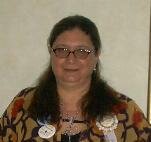
Tammy Liller, President and one of the founders of the National Fibromyalgia Partnership, shared much of her background in an interview with Chronic Fatigue Research France, Inc. Born, in Ann Arbor, MI, she was named Tamara after a ballerina, but developed an outdoorsy personality. Her given name, Tamara, is reserved for print. Here she talks about how she came to develop Fibromyalgia, its affects on her life and her involvement in advocacy. Tammy’s story has many parallels to the attitudes toward and treatment of Fibromyalgia over the last 30 years.
OFCW: Please tell us a little about yourself and how you came to have fibromyalgia?
Tamara: … In the first, I was a passenger in a car that was hit broadside by a panel truck traveling about 45 mph. The car I was riding in was totaled. Although I showed no outward signs of serious injury, the paramedics who arrived at the scene of the accident chose to take me to a local emergency room because I showed signs of shock and had pain in my hip and lower back. A hospital exam and x-rays showed nothing wrong, and I was sent home. For several days after the accident, I remember having a very stiff, sore neck (whiplash) and overall body soreness, but after that I seemed to be fine.
The second accident occurred during one of the famous Chicago blizzards, I was a passenger on a commuter train that was struck from behind when another train skidded into a station while the original train was still trying to pick up passengers. In this accident, I hit the side of my head/face on a handrail and had a couple of people slam into me. Again, however, there was no evidence of any injury, and I wasn’t taken to the hospital. My earliest symptoms crept into my life slowly several months later and were “insidious” as the doctors like to say, and for a while I was able to finish graduate school, work, and lead a normal life. That didn’t last long, though.
I won’t trudge through all of the symptoms I suffered later on as a result of those accidents because, while severe, they were not terribly different from those of other fibromyalgia (FM) patients, except in one respect. Because I had unknowingly suffered injuries to my head, neck, and left ear during my accidents, I not only developed fibromyalgia and a few other syndromes but also disequilibrium that was so severe that I was completely bedridden for over a year.
Unfortunately, during that time (the late ’70’s and early 80’s) no one really knew about “fibrositis” as FM was then called. So when I became seriously ill, I was jockeyed from specialist to specialist, first in Chicago and later in Washington, DC, where I returned for medical help when I was no longer able to work. Although like many of you, I saw several odious doctors who characterized my illness as “stress-related” or “psychogenic”, I also saw many highly skilled and well-meaning doctors who tested me for all kinds of gruesome illnesses (i.e., brain tumors, lupus, MS, parasitic diseases, etc.) or simply tried and tried but couldn’t figure out what was wrong with me. After six long years of testing (often at major medical centers), I was finally diagnosed with severe TMJ (a dislocated disc to be precise) by a particularly gifted ENT specialist who was evaluating me for dizziness. The dentist I then went to see for TMJ treatment referred me to a rheumatologist for evaluation, and it was only then that I was diagnosed with severe “fibrositis” and later myofascial pain syndrome (MFPS). Back then, fibrositis was thought of as only a pain disorder, so it took me (and my doctor) a while to tie in all of the related symptoms I was experiencing. It was not until 1991 that I learned that I had also punctured a small hole in my inner ear during one of my accidents (which required microsurgery). It was as late as 2001 while participating in a FM research study that I learned that I had actually suffered a mild traumatic brain injury during one or both of my accidents. This was also treated with specialized EEG neurotherapy.
I was extremely fortunate to have the help and support of my mother and my significant other during this time and since. Their lives, like mine, have also been turned upside down by everything that was happening, and yet they managed to be there for me during some very difficult times.
OFCW: What did you do to learn about fibromyalgia?
Tamara: When I was diagnosed with FM, TMJ, and MFPS, there was no internet and very little written about my new conditions. Looking back on those early days, I believe I learned the most about my illnesses from the therapeutic treatments I received. I was fortunate to (finally!) have three exceptional medical professionals (a rheumatologist, a TMJ specialist, and a physical therapist) who were not only knowledgeable but also worked together as a team. Even so, I was a challenging patient. During all those years that I had searched for a diagnosis, the muscles in my neck and upper back had become severely atrophied, my musculoskeletal system had become very weak, and my posture and equilibrium were so poor that I could only stand for short periods (and then usually by hanging onto something or someone). Also problematic was that my jaw was severely out of alignment and traumatizing nearby facial and neck muscles. Not surprisingly, I required several years of intensive physical therapy and work with therapeutic dental orthotics—both of which were very painful at first. Nevertheless, I learned a tremendous amount about how/why my body was “malfunctioning” and what the implications were in terms of symptoms and useful treatment. I was always very sensitive to medications, so my particular road back in terms of improved functioning and better knowledge was through physical rehabilitation.
It may sound trite to say that education and increased body awareness are key factors in recovery. However, understanding what is going on with your body and how you can assist it with therapy (or whatever works for you) is very empowering and helps combat equally dangerous enemies like fear and helplessness and hopelessness. Of course, later on when more research was being published on fibromyalgia and related conditions, I was able to learn more in a traditional sense.
OFCW: When did you form your support/education group? Give a history of the start and how it grew.
Tamara: The National Fibromyalgia Partnership (NFP) came into being in 1992, but in those days it known as the Fibromyalgia Association of Northern Virginia (FMANV) and later as the Fibromyalgia Association of Greater Washington (FMAGW). Its official founders were Lori Deramus (a local business woman) and Jan Mutter (a former staff member of a major newspaper). The circumstances by which I became involved are rather funny. Although I didn’t know it at the time, both Jan Mutter and I received treatment from the same physical therapist, on the same days, during adjoining time slots. I guess Jan must have known that the patient who came after her (me) was also a FM patient, and so when she and Lori were trying to gather together attendees for their first fibromyalgia group meeting, she nagged “our” physical therapist until she finally agreed to ask me if I would be willing to attend the first group meeting. I really wasn’t a “joiner”, and I suppose I had the same clichéd ideas about support groups that other people have. Also, I was using up most of my energy working at a new part-time job. The therapist knew this but finally agreed to help “recruit” me for that one meeting. In the end, curiosity got the best of me because I was really rather interested in seeing some of those other people who had what I had. So, I went. Actually, Jan and Lori needn’t have worried because nearly 60 people showed up at their first meeting. It was a very good meeting (not so much a support group as an educational forum), and so when a clipboard was passed around for suggestions/volunteers, I wrote down that it would be a great idea to have some sort of newsletter, particularly for those who were too ill to attend meetings. At that moment, my fate was sealed. Fibromyalgia Frontiers was born, and I have been its editor and primary writer ever since.
In a way, I recruited myself. My family, who see little of me these days because of all my work in the FM community, still half-kidding blame my physical therapist for my involvement. I became a member of the first FMANV Board of Directors along with a lot of other talented people and not long after became Vice-President. After about a year, Lori Deramus moved on, but Jan and I have been with the organization ever since. I have been President of the organization for about seven years and now average about 40-60 hours/week working for the NFP! Over the past decade, it has grown quickly but steadily.
OFCW: Do you take part in advocacy activities?
Tamara: As you know, there are several kinds of advocacy. The best known type involves grass roots lobbying or direct lobbying, meaning that letters or other appeals are made to public officials (usually legislators at the federal and state levels) or that public officials are approached directly, usually with the hope of gaining recognition for a particular cause or obtaining funding for research or public services. Such appeals can be undertaken by an organization as a single unit, sometimes using paid lobbyists (very expensive to hire), or by the individual members of the organization.
It is also possible to work directly with government agencies that provide funding for particular activities (i.e., research, disability, social services) and advocate for your cause. For fibromyalgia, the overarching federal agency of interest is the U.S. Department of Health and Human Services (DHSS). The specific agencies under the DHSS umbrella of greatest interest to persons with fibromyalgia are the National Institutes of Health (NIH) which funds medical research and the Social Security Administration (SSA) which grants or denies disability claims, although there are others.
Two more indirect forms of advocacy often not recognized as such are education/awareness and research advocacy. Organizations formed to educate and raise awareness essentially argue on behalf of a particular cause (in this case fibromyalgia) by demonstrating its legitimacy, its potential to cause harm (i.e., debilitating symptoms), and the need for public attention (i.e., research, better awareness of the condition among both professional and lay persons), and public support (i.e., funding, public services). They do this by disseminating literature or resource information, providing educational forums, and/or offering an informative website. Organizations that raise money for research or directly fund research are essentially advocates for better knowledge (and thus more research dollars) about the causes and useful treatments for fibromyalgia.
What many people do not know is that non-profits like the National Fibromyalgia Partnership and most of the larger fibromyalgia organizations have an IRS designation of 501(c)(3) which allows them to conduct educational/awareness/research activities relatively freely but put strict limitations on any grass roots or direct lobbying that is conducted. Therefore, while the NFP (like many of its sister FM organizations) has promoted letter-writing campaigns in the past and engaged in other projects, most of its efforts are in other areas.
At the National Fibromyalgia Partnership, our #1 priority is education. The underlying assumption is that the greatest need is for fibromyalgia patients and their families, the medical community, and those in a position to impact the future well-being of FM patients (i.e., members of Congress, senior staff at government agencies, judges, social service employees, etc.) to have a BASIC understanding of what fibromyalgia is, its legitimacy as a medical condition, and why more research and/or social action is needed on its behalf before greater achievements in terms of advocacy can be made.
It is important that providing educational materials and programming is extremely difficult because not only must a wide range of consumers of differing educational, socioeconomic, and cultural backgrounds be accommodated across the country, but the credibility of the EDUCATOR must be established. Just because a fibromyalgia organization makes a case for its illness doesn’t mean that persons reading its literature will BELIEVE what is being said. For example, more times than I can count, I have heard physicians at professional conferences say that they can’t believe what support groups say because members of such groups have their “own private agenda” or circulate information of poor quality. One of the reasons I am most proud to be affiliated with the National Fibromyalgia Partnership is that from its very inception, a heavy emphasis has always been placed on professionalism and on providing the most medically-accurate, quality information on fibromyalgia that is possible. In the long run, this has paid big dividends in the confidence that has been placed in us by the general public and by the medical community. It is a confidence that has been earned by more than a decade of extremely hard work.
The NFP has also been in a unique position to work with the specific Institute within the National Institutes of Health which currently funds the lion’s share of fibromyalgia research: the National Institute of Arthritis and Musculoskeletal and Skin Diseases (or NIAMS). In late 1997, I had the honor of being appointed by then Secretary of Health and Human Services Secretary Donna Shalala to serve for four years as a member of the NIAMS Advisory Council, a national body comprised of 12 scientists and six patient advocates from around the country. I am the first, and so far the only, person with fibromyalgia ever to serve on this Council. I was also invited to serve on a NIAMS Ad Hoc Committee for Information Dissemination which advised the Institute as to how it might best compile and distribute information on a wide variety of illnesses throughout the U.S. While my role on the Council and the Committee was only advisory, serving in this capacity allowed me to meet and get to know most of the NIAMS staff and help articulate the very real needs of the fibromyalgia community and of the larger community of persons with chronic illnesses. Although my official tenure on the Council ended last year, I still stay in touch with NIAMS and continue to work with them on special projects.
Our organization has also been fortunate to have amongst its members a lobbyist and former staffer to Senator Tom Harkin (Bruce Cameron) as well as a former campaign manager for Harkin (Jill Lenz). Both Bruce and Jill are well known to the Senator (who is the ranking Democrat on the powerful U.S. Senate Appropriations Sub-Committee on Health and Human Services), and they serve as living examples of people coping with severe fibromyalgia. Both of them have worked hard and quite successfully as individual citizens to get language favorable to persons with fibromyalgia included in Senate and House Appropriations Committee reports, and this has ultimately led to more research funding for FM from the National Institutes of Health and other agencies on more than one occasion. At the NFP, we have provided technical support to their efforts by supplying information when requested on the progress of fibromyalgia research (or the lack thereof) and areas needing particular attention in the future.
OFCW: What are some of the stumbling blocks that you see for the average patient? Do you think there is anything that experienced advocates could do to help?
Tamara: Arguably, the toughest hurdle that a fibromyalgia patient has to cross is his/her initial confrontation with fibromyalgia. The symptoms are frightening, painful, and usually very debilitating. Even if the patient has thus far enjoyed relatively good health and a successful working and private life, the life changes which must be endured and ultimately embraced are both shocking and formidable. For those whose lives were already challenged or in crisis for any of a number of reasons, struggling with fibromyalgia may be the last straw. If a knowledgeable fibromyalgia-aware physician is not available to provide a prompt and accurate diagnosis along with appropriate and (hopefully) effective treatment, the fear, pain, and disability can be greatly prolonged and the support of family and friends (if even available) may quickly erode. If illness is severe, then questions of employability and survival in an economic sense may become central. Fulfilling obligations to offspring and friends/family may also become problematic.
Fibromyalgia support organizations can be helpful advocates to fibromyalgia patients by providing a lifeline of educational and resource material which helps them and their families to understand their illness and seek appropriate help whether it is from health care providers, community support services, Social Security Disability, or some other source. Experienced advocates can also help on the local level by raising awareness of fibromyalgia in the local community and working for a broader array of support services for patients and their families from various agencies and establishments responsible for social services (i.e., state and local government human services agencies, houses of worship, other charitable services in the community, etc.). Also important is creating a better public image for people with fibromyalgia. Stereotypes of fibromyalgia as a “trashcan” diagnosis, a trendy disease, or a malingerer’s disease hurt patient morale and undermine the legitimacy of the medical condition. Unfortunately, getting more media coverage is not enough; getting ACCURATE media coverage in quality publications and programming is more important.
OFCW: If you could pass a law tomorrow to help FM and CFIDS sufferers, what would it be?
Tamara: Much has been said and written about the great need for more research dollars for fibromyalgia and related conditions so that the causes of these illnesses might be better understood and effective treatments (or a cure) realized. I don’t think any FM or CFIDS patient would argue about the importance of this goal. Many are also trying to find new ways to ensure that persons with fibromyalgia and CFIDS have fair access to Social Security Disability Insurance (SSDI) and Supplemental Security Income (SSI) and associated benefits like Medicare and Medicaid. Also frequently mentioned by many FM patients are better alternatives to managed care, improvements in health insurance options/costs, and less expensive prescription drugs. All of these are important issues.
Another crucial issue is how individual medical conditions are considered for funding. While the United States is renowned for its great technical advances and skill in medicine i.e., organ transplants, coronary bypass surgery, neurosurgery, cancer research/treatment, and emergency medicine. Unfortunately for those of us with chronic illnesses, a great many of the strides taken have been for acute conditions or injuries/diseases that are immediately life-threatening. The National Institutes of Health even has a term to help explain how such conditions get priority. It’s called “burden of illness”. What this means is that individual medical conditions can be prioritized for the purpose of funding by assessing their scores on particular variables which might include: prevalence of the condition, associated mortality rate, economic/societal cost (lost earnings, associated health care costs), associated morbidity (degree of illness and suffering), and so on. Of course, each of the variables can be weighted depending on one’s priorities. While a condition like fibromyalgia which affects an estimated 10 million might score well in areas of prevalence, associated economic costs, and morbidity, it would do poorly on the mortality indicator (usually heavily weighted). High profile, life-threatening medical conditions that quickly cause widespread and harm and even death (i.e., cancer, AIDS, small pox, etc.) are “easy sells” and are virtually assured generous funding/support. Also considered highly deserving are acute conditions that can be managed by the correction of major mechanical defects in the body using medical technology (pacemakers, organ replacements, corrective surgery). Even less sensational medical conditions that have “been around” for a long time and have strong lobbies on Capitol Hill can be assured pretty good funding success. Unfortunately, that leaves a lot of illnesses and health concerns to compete for research scraps. Orphan diseases, many chronic illnesses, and diseases that are complex and not well understood are among the members of this latter group.
One must ask, whether fibromyalgia can ever hope to compete with illnesses like cancer and AIDS under these circumstances even if it had a strong political lobby and a strong media presence? Arguably not. What makes matters worse is that FM-related conditions like CFIDS, myofascial pain syndrome, irritable bowel syndrome, interstitial cystitis, and others are scattered across several different institutes at the NIH (and in the case of CFIDS, the Centers for Disease Control and Prevention) and are funded separately. So, in effect, fibromyalgia not only competes against other, unrelated illnesses for funding, it also competes against offshoots of itself for research support! Fortunately for us, the NIH has realized there are certain economic benefits to having several institutes’ co-sponsor research on fibromyalgia and associated conditions, so things are improving a little.
The point is that it helps to remember that chronic illness as a group are generally a poor cousin compared to other types of medical conditions when it comes to basic funding for research and treatment. Furthermore, specific chronic illness groups compete against each other even when they may share many interests: common pain mechanisms, effective treatments (or lack of same), employment and disability issues, social support services (i.e., emergency subsistence, health care services, family counseling, etc.). Thus, I would suggest that our time would be well spent examining the legal obstacles which stand in the way of chronic illness groups working together with a common, stronger voice for the mutual benefit and consider turning them on their ear.
OFCW: What services do you think cities or states could offer patients with FM or CFIDS?
Tamara: If there is little basic understanding about fibromyalgia and CFIDS in today’s society, there is even less awareness about the day-to-day living conditions of patients with these conditions. Those who live alone and are unable to work full-time often face serious economic challenges and must choose between paying for housing and meals and purchasing needed medications and treatment. Often, such persons are isolated and are unable to get help doing grocery shopping or visiting the doctor. Even if able to work, many cannot afford vocational training which might allow them to work in a different kind of job settling that would be easier to handle with a disabling condition. Of course, couples or families can also be in crisis, particularly if other family members are also ill or disabled.
State and local governments have always had an important role to play in providing emergency services and social support services to area citizens. Unfortunately, “fibromyalgia” and “CFIDS” are often largely unknown in some areas, so getting and keeping benefits can be very difficult. Of course, in poorer states, the offerings are a lot leaner anyway. Local houses of worship, non-profit organizations, and community groups or clubs are often overlooked as powerful sources of help.
Local area fibromyalgia and CFIDS support groups/organizations have a key role to play in raising awareness and providing educational and resource information on FM/CFIDS at the local level. They, and not the regional or national organizations, are most familiar with local conditions and needs. Not only are there many ways that they can help in their communities but they can also communicate needs to regional/national organizations that can in turn provide technical support and work as advocates on the national level.
OFCW: Life handed you lemons and yet you adapted and adjusted and made lemonade by becoming a well-known and sought after leader and advocacy figure. How did you do it?
Tamara: When people call or email our organization, they frequently ask if we have fibromyalgia, like them. I suppose some are used to contacting organizations where the staff don’t have whatever the medical condition is but are simply paid to answer phones or email. Others are just surprised that a person with anything but a mild case of fibromyalgia could put in the hours we do at the NFP. The reality is that all but two members of our regular staff have fibromyalgia and both of them are the spouses of FM patients.
As I mentioned earlier, I began my life with fibromyalgia pretty badly off in terms of severity of symptoms and level of functioning. After spending a lot of time in the trenches fighting for myself and for a diagnosis, I was fortunate to find a skilled team of treatment professionals who were able to help me combat the physiological aspects of FM, TMJ, and MFPS, including my problems with disequilibrium. Frankly, it was my own determination and the strong support of my family that were crucial in overcoming the psychological barriers that these conditions brought: fear of what was happening to my body, lack of confidence about doing “normal” things again, and just simply “hanging in there” for months and years at a time.
Nowadays, my work in the fibromyalgia community gets its greatest energy from three main sources. First, being ill and undiagnosed for so many years made me more and more furious about a medical system that is capable of dragging a person through endless hours of costly and exhausting testing or “trial and error” treatments when the initial diagnoses should be relatively straightforward. As time went on and I met others with fibromyalgia who’d had experiences similar to mine, this fury became more of a dogged determination to change the status quo. In fact, one of the early projects of our organization as the FMANV was to do a large-scale survey of fibromyalgia patients to determine just what their experiences with FM had been.
Secondly, even after I escaped from the darkness and isolation I experienced as an undiagnosed “sick person” and found answers and help for myself, I was still haunted by the thought that if I started the process “fresh” all over again, I couldn’t be sure that my experiences with the medical community would be any different than before. In other words, I wasn’t convinced that the same thing couldn’t happen to me or someone like me all over again if I started from scratch without the knowledge I now had of the nature of my illnesses. It was disheartening to think that success in finding a diagnosis and treatment for fibromyalgia depended a great deal on where one happened to live, which medical professional he or she consulted, and so on. Even today with all the progress we have made as an illness group, I am not sure that my early trepidation is not still justified.
Thirdly, the gift I have been given on this earth is the ability to put into writing the things I have learned from experience, from books and articles, or from listening to experts or fellow patients. Put this ingredient together with the two above and add the right group of fellow activists and you have one very determined person (yours truly) working at the NFP!
There isn’t one of us with fibromyalgia at the National Fibromyalgia Partnership who has a mild case of FM. All of us have waged extremely difficult battles with FM and associated conditions over the years, and we continue to struggle with the condition each day, like most of you reading this. The challenge for us, and for our counterparts in sister organizations, is to get up each day prepared to work, and often work hard, whether we feel particularly well or not. The truth is that we feel lousy more days than we can count and sometimes put ourselves at risk for flare-ups and other concerns. The reality is when you have a large organization, the responsibilities and workload are also large and do not simply go away when you have a bad day, week, or month. So life in the fibromyalgia world can sometimes be quite punishing physically and emotionally. Thus, “hanging in there” has a whole new meaning, and you really have to know why you are there. In my case, I am there to make a difference and to help others not to be a celebrity or a big cheese.
On the positive (“lemonade”) side, I can say that I meet people (both patients and medical professionals) with incredible strengths and talents all the time, and I learn many new things that are not only exciting to me personally but also potentially helpful and inspiring to a great many others and these I try to pass along in NFP publications. While there is still a great deal that needs to be done in the fibromyalgia world, I can honestly say that our organization has made a significant difference in the lives of a great many fibromyalgia patients and their health care providers. In that sense, working for the NFP and the larger FM community is its own reward.
OFCW: Are you having a conference in 2003?
Tamara: No. Our 2002 conference in Orlando, though very successful, was also very costly in staff time/energy. During 2003, we will be taking a break and offering some smaller programs. On February 12th, in conjunction with several support groups in North and South Carolina, we will be co-sponsoring a speaker presentation featuring Charles Lapp, M.D., in Raleigh, NC. Later in the year, we hope to offer other short programs, one perhaps in the Washington, DC, area and another possibly farther from “home” in conjunction with one or more fibromyalgia group(s).
All opinions are those of the person interviewed and not those of Our FM-CFS World, Inc.
 |
Interview Conducted By:
Anne-Marie Vidal
Awareness and Advocacy Coordinator